

We’re a little more than a week from the Super Bowl, which is the biggest betting event (at least for a single game) in the US every year.
An estimate for the state-regulated sports betting industry puts Super Bowl wagering at $1.7 billion. Trading volume at prediction markets — both in the US and including Polymarket international — will almost certainly eclipse $1 billion in trading volume. It’s definitely possible that Kalshi and its partners hit a billion on the game by themselves. (Evergreen reminder that volume =/= handle.)
After the NFC and AFC championship games, sportsbooks quickly put up massive betting menus on the Super Bowl. Kalshi seemed to take a page out of that playbook. I won’t say the offering is “massive,” but it’s definitely pretty robust. Beyond the moneyline, spread, total, and player props, markets listed on Kalshi as of Thursday night included (this is not an exhaustive list):
When the first touchdown would be scored
Number of two-point conversions
Will a non-quarterback make a pass attempt
Will there be a touchdown by a defense or special teams
How many lead changes will there be
And so on. It’s a lot!
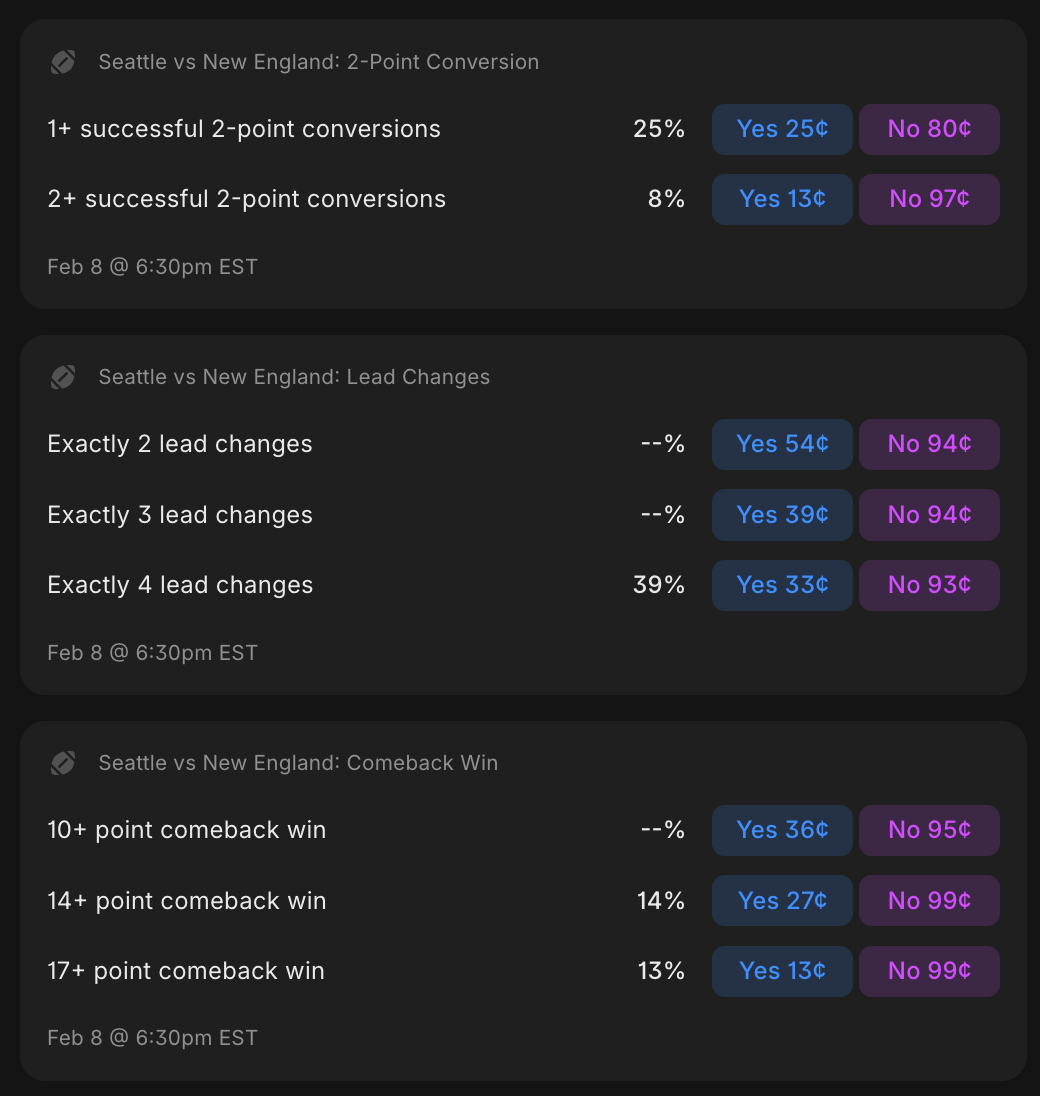
Meanwhile, when I log onto the Polymarket US app, here’s what I get as of late Thursday night and Friday morning.
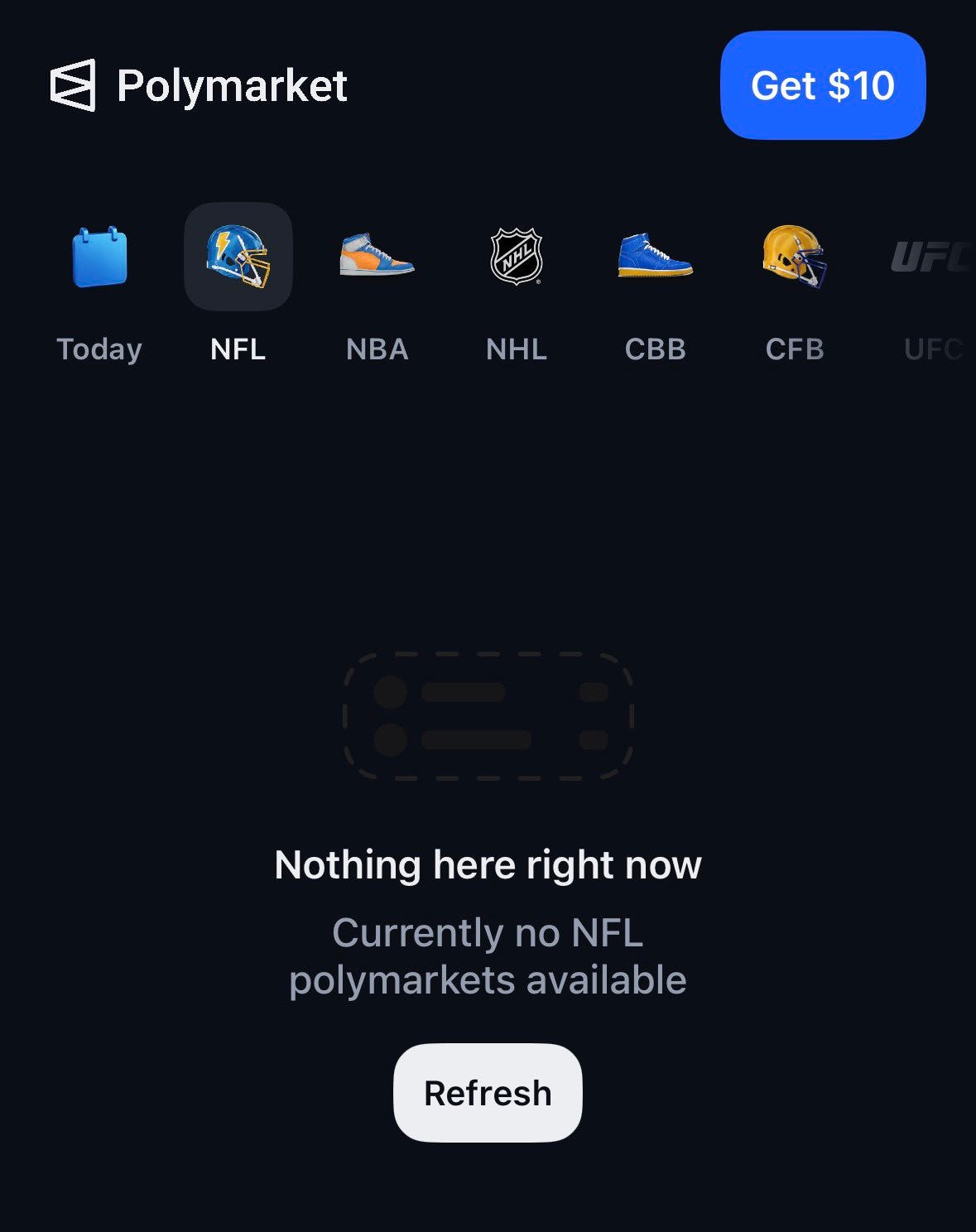
Actually, when I looked in the morning, there were no markets available on any sport. You can bet on the Super Bowl on its international site. This is, of course, a terrible UX if someone downloads or logs into the app and doesn’t even see the markets available.
There’s still plenty of time until the game begins, and presumably Polymarket will have some markets before next Sunday. But still, I would rather have the markets up now than not.
Polymarket has been in what amounts to a beta for months. Many observers (me included) figured Polymarket would make a big push during football season. And while it has soft-launched and acquired customers, it’s nowhere near a finished product or a critical mass of users/volume. The Super Bowl is as good an opportunity to acquire new bettors as it gets, and now it looks like it’s still ceding the market to Kalshi, Robinhood, etc.
How Polymarket scales its product and its markets in 2026 will be a major story over the spring and summer.

You can’t pause current events when your payments can’t keep up. With every failed deposit or lengthy withdrawal process, customers lose trust in your brand. And when money doesn’t move fast enough, your liquidity suffers. PayNearMe’s PayXMTM platform is purpose-built for Payment Experience Management, giving you the fast, familiar payment options your customers want while streamlining back-end operations for your team. Get real-time payments for real-time events—from one simple integration.
Everything I wrote about prediction markets this week


Prediction markets roundup
More on CFTC chair’s statement on prediction markets: Commodity Futures Trading Commission Chairman Michael Selig caused a stir on Thursday by saying a lot of stuff about prediction markets.
I don’t think there was much surprising in the statement…I figured everything he said was probably coming at some point. The only surprise to me was the timing; he hasn’t been in the big chair very long, and there are no other commissioners in the CFTC.
Selig had hinted at rulemaking for prediction markets previously, and that’s apparently coming to fruition.
He withdrew a proposed rule on political and sports event contracts. Again, not a shock.
The two more interesting things Selig noted:
He is rolling back the CFTC’s guidance from September, which said, in part: “The advisory notes that companies involved in the prediction markets ecosystem should be prepared for having to deal with the possible ‘termination of sports-related event contract positions’ based on state litigation and regulatory actions. A number of states have issued cease-and-desist letters to Kalshi for allegedly offering sports betting without a license. Kalshi is actively engaged in litigation with three states.” It’s not clear what that truly means, as the original advisory was issued in concert with the government shutdown.
He also noted the CFTC might weigh in on court cases involving Kalshi and other prediction markets. That has a chance to move the needle in federal cases around the country. It’s also arguably a departure from what he said during the confirmation process. When he was pressed on his thoughts on sports event contracts, he said he would defer to the courts. Of course, the CFTC under Selig will still presumably listen to the courts, but it may also try to put its thumb on the scale after Selig’s remarks.
One addendum to the news:
 Dan Bernstein@dan_bernstein_NEW: James Siva, Chairman of the California Nations Indian Gaming Association, has released a statement criticizing CFTC chair Michael Selig for being a corporate "cheerleader."
 1:12 AM · Jan 30, 2026 · 909 Views1 Reply · 4 Reposts · 5 Likes
NFL Won’t Allow Prediction-Market Super Bowl Commercials (Front Office Sports): “But you won’t see any prediction-market commercials during Super Bowl LX between the Patriots and Seahawks on Feb. 8. Prediction markets are among the list of ‘prohibited categories’ for the Super Bowl, a source familiar with the matter tells Front Office Sports. Prediction-market commercials have not been allowed on NFL broadcasts all season; they were added to the list of categories the NFL forbids before the kickoff of the 2025 season, the source says.
Wall Street Pros See Potential, Obstacles in Prediction Markets (Bloomberg, paywall): “Wall Street professionals have a broadly positive perception of prediction markets, but the nascent sector’s lack of liquidity is a key stumbling block to reaching the mainstream.”
“Around 43% of market structure experts view prediction markets as an innovative value-add to the overall marketplace, according to a flash survey conducted by Crisil Coalition Greenwich this month. A similar range were neutral on the space’s prospects, while around a fifth said the markets encourage gambling and introduce additional “risk noise” instead of trading signals.”
Yahoo Finance rolls out prediction markets integration:
 Polymarket@PolymarketWe're excited to announce Polymarket odds are now natively integrated across the entire Yahoo Finance platform. Polymarket 🤝 Yahoo Finance
 Yahoo Finance @YahooFinanceQ: Who will be the biggest tech company by June? "I am going to go with Nvidia," Slatestone Wealth strategist @KennyPolcari says. Q: Who will have the best model by the end of January? "I would go with Google," F.L. Putnam Investment Management Co. strategist Ellen Hazen says.3:58 PM · Jan 29, 2026 · 45.5K Views44 Replies · 24 Reposts · 181 Likes
You can see the hub here; the deal was previously announced.

Ban Prediction Markets (Current Affairs): “The United States needs to follow in the footsteps of countries like Portugal and Hungary, and ban prediction markets altogether. And if that day comes, don’t let anyone gaslight you into thinking we’re losing some kind of invaluable “information market.” These apps are just casinos for crypto junkies. They have added almost nothing of value to the world. The few bets that aren’t easily manipulated, completely random, or vulnerable to insider trading, are downright dystopian. If you’re the kind of person who wants to bet on the number of measles cases next year, you should be forced to find some weirdo bookie in a back alley, like the good old days, instead of handing your money to a platform advised by the president’s son.”
Eric Swalwell, a California candidate for governor, referenced Kalshi odds:
 Eric Swalwell@ericswalwellI’m betting on Californians. And they’re predicting on @Kalshi that we win BIG.kalshi.comWho will be the next governor of California? (Person) Odds & Predictions 202611:47 PM · Jan 29, 2026 · 2.9K Views26 Replies · 15 Reposts · 43 Likes
To be clear, Kalshi is not at all predicting he will win big. In fact, it’s not even predicting he’ll win. He’s just the favorite to win as we sit here. At a 49% chance, Kalshi’s market is actually saying the field has as good of a chance of winning as he does!
It would be great if people referencing prediction market odds didn’t exaggerate, or at least understood what they are looking at.
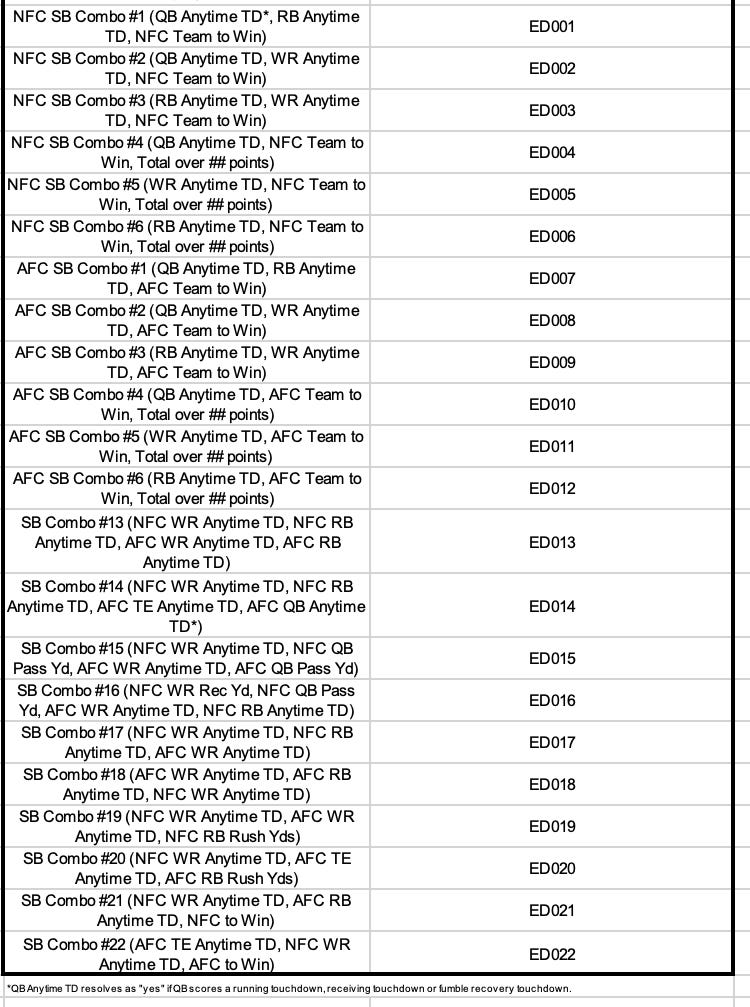
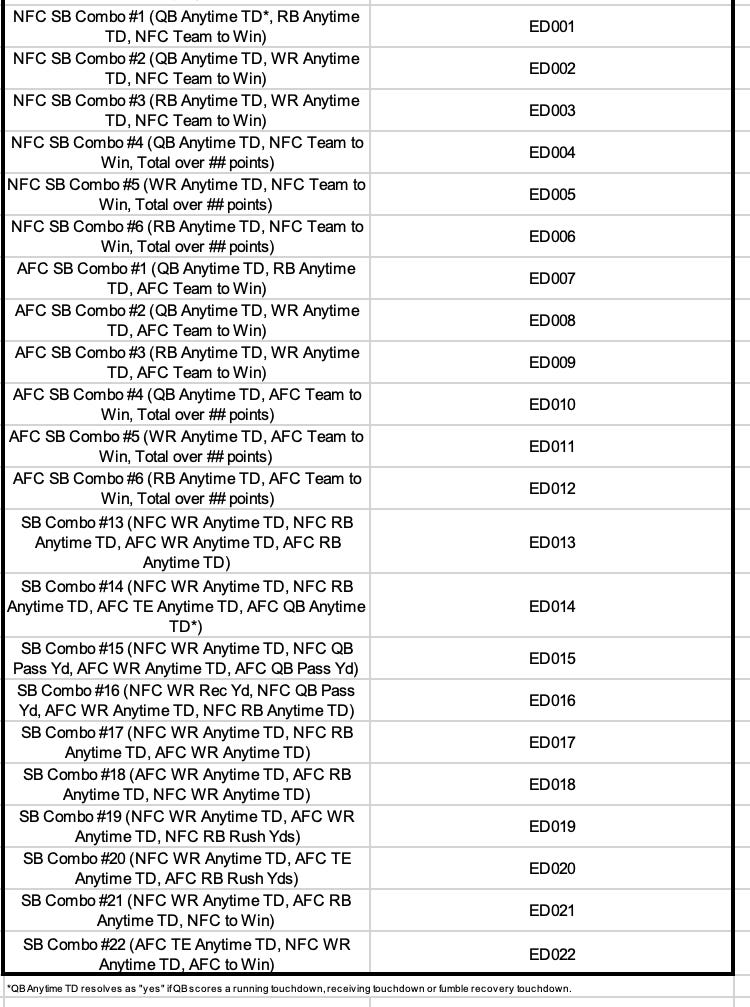
Here are the parlays that DraftKings and FanDuel prediction markets might list: Per a filing by their partner, CME Group:
DAZN’s Prediction Market Push Tests Streaming Apps Ability to Compete (DeFi Rate): “DAZN’s decision to integrate prediction markets into its US platform through a partnership with Polymarket aims to combine live sports streaming with real-time financial speculation. But there are questions about regulation, competition, and the exposure of younger audiences to betting products. Speaking at the ICE 2026 trade show, DAZN CEO Shay Segev framed prediction markets as a natural extension of fan engagement. He placed DAZN alongside platforms such as Kalshi, Polymarket, and Crypto.com. Yet DAZN’s entry comes at a time when the US prediction market is already crowded and increasingly scrutinized.”
Everyone’s Cheating On Prediction Markets, And You Would Too (InGame): Research backs me up. Nina Mazar, along with On Amir and Dan Ariely, published a paper called The Dishonesty of Honest People in 2008. Their finding? People cheat. Not a lot, but consistently. Enough to pocket some extra cash while still being able to look in the mirror and see a good person looking back. In one study, participants could overreport how many math problems they’d solved. Given the chance, they inflated by about 13% of what was possible. Not zero. Not the max. Just enough. But here’s the rub, especially for prediction markets and really, all forms of online wagering: When the researchers had people earn tokens instead of cash, tokens they’d swap for money seconds later, cheating more than doubled. One step removed from actual dollars, and everybody’s inner grifter wakes up.
Another class action:
 Daniel Wallach@WALLACHLEGALNEW: Kalshi has been hit with a class action lawsuit in Alabama federal court for operating an illegal sports betting website. (AL has among the strictest anti-gambling laws in the US; more than 40 sweepstakes casino lawsuits already filed). This is the 1st PM case filed in AL.
 2:56 AM · Jan 30, 2026 · 4.59K Views2 Replies · 7 Reposts · 18 Likes





talked to polymarket team. SB markets will be up this week